They are all educators. Then why is one called a teacher, the other a professor, and the third one a Guru? What is the difference between them?
A teacher teaches. A professor professes. A Guru wizens. In all three professions, learning is the most fundamental element acquired by the students. Yet, fundamentally, these three people are different in the degree of learning they help their students acquire.
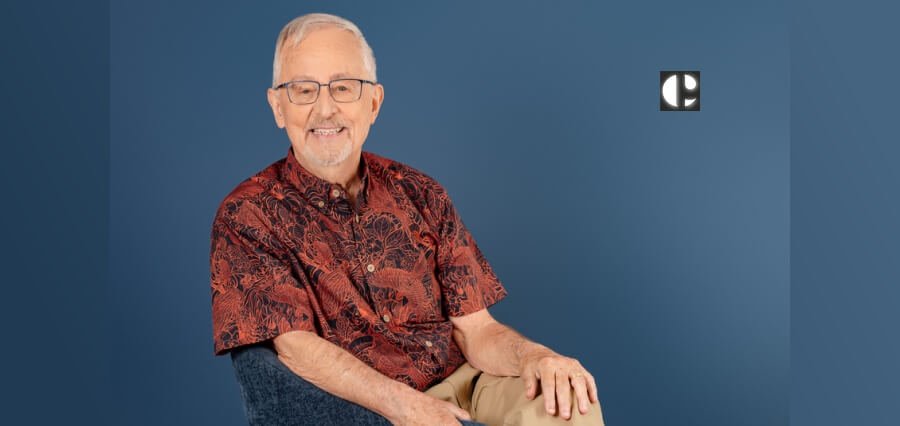
Possessing all these personalities and going beyond, Professor Dr. Richard Charles Larson has established a fourth category—that of a modern learning luminary who is shaping the future of global education.
How?
From Circuitry to Classrooms: The Accidental Beginning of a Lifelong Calling
To know the answer, we have to witness Prof. Dr. Larson’s fascinating journey, which began when he fell into education by accident. As a Massachusetts Institute of Technology (MIT) undergraduate, he majored in Electrical Engineering, following in his father Gilbert C. Larson’s footsteps. “My father is the person I admire most in my life.” He was a superlative electrical engineer, working for companies such as Hazeltine, Westinghouse, and Raytheon. Plus, he was an accomplished carpenter and general renaissance man!
More Than a Professor: Building the Identity of a Global Educator
As a graduate student at MIT, Prof. Dr. Larson served as a TA (Teaching Assistant) for an undergraduate Applied Probability course. “I fell in love with teaching there, as I witnessed my students’ eyes light up, moving from disinterest, confusion, and lack of understanding to full comprehension and their deep interest, all in a manner of minutes. This, to me, was Heaven on Earth!”
MIT and Beyond: Teaching Across Five Disciplines with One Passion
Prof. Dr. Larson’s journey evolved further as his early experience and compassion inspired him to become a professor. He puts it in humble words, “I guess I was a good TA. I loved the teaching, and I became known for being a good teacher.” His faculty advisor, Professor Alvin W. Drake, asked him a few months before getting his PhD this question: “Dick (as Prof. Drake fondly called him), why don’t you stay on here at MIT as an assistant professor for a couple of years before you go off and make your millions?” (That’s an accurate quote.) Prof. Dr. Larson was shocked. “In thinking of MIT faculty positions, I guess I had the “Groucho Marx syndrome”: “I’d never respect a club that would have me as a member!” It was astonishing to him that Prof. Drake offered such an opportunity. He grabbed it! As time moved on, he was promoted to associate professor, then associate professor with tenure, then full professor and then (now) A Chaired Professor (MIT Mitsui Professor).
Eyes That Light Up: The Real Reward of a Great Teacher
Prof. Dr. Larson’s personality is like a free bird. Teaching across multiple disciplines and streams, his professional style has been developed in a 360-degree way. In his words, for as long as he can remember, he’s been a sort of Libertarian free spirit. “MIT graciously allowed me to flourish as a free spirit who has had five different academic departments as home. My home department changed as my research and teaching interests changed.” These ranged from Electrical Engineering to Urban Studies and Planning to Civil Engineering, and so on, finally landing in the interdepartmental and interdisciplinary MIT IDSS, Institute for Data, Systems, and Society. He likes the name of IDSS, with the words “Data, Systems, and Society” reflecting exactly what he does!
Also, he doesn’t think his fundamental “professorship style” has changed as a result of all these movements. What has changed is the content of what he does in teaching, research and mentoring.
Prof. Dr. Larson’s teaching stands out in the highly competitive educational industry because, according to him, good teaching requires committed and enthusiastic engagement from the students in the class. The subjects that he taught (applied probability, Markov processes, urban operations research) all have an applied nature. In teaching, he would almost always bring in the real world and present to the class, usually interactively (asking questions along the way), “The real-world applications of what we are now introducing. That seemed to perk up their interest and got them committed to learning the material.”
Research with Purpose: Solving Real-World Problems, Not Just Theorems
He further says that he is lucky to be an Operations Research professor. “That’s because Operations Research is, and I know this sounds weird, “Research on Operations.” He then walks us through the core teaching and research methodologies he adopted over time and their impact. Operations Research pertains to the real world, not some fictional simplicity that can be understood from one’s comfortable office. “The Operations we study may be small, like queueing at traffic lights, to quite large, like operating American Airlines.”
So, in his teaching, he almost always related their “theory” to real-world examples. The students enjoyed that, and it got them to remember the results more easily.
His research, too, has been applied. Yes, he derived some new theories and models (e.g., the Hypercube Queueing Model), but all were motivated by framing, formulating, and then solving a real problem.
The Power of Pencils: Rediscovering Old-School Learning in a Digital Age
There is another distinction. With regard to modern fads in learning, like leveraging technology and digital transformation to improve students’ immersive learning experience, Prof. Dr. Larson proudly says, “I am old-fashioned. I believe in computers turned off and the student interacting with the material with many sharpened pencils and blank sheets of paper at hand.” Recent educational research has validated this approach, as the mechanical movement of your hand, writing out key results, is a best-in-class pathway to parts of your brain that will store and remember the results. So, for him, a student’s “immersive learning experience” is with pencil and paper!
Not the Answer, But the Process: A Philosophy Rooted in Depth
He explains, “Let’s not confuse a Google search for an answer as real learning. I like to say, “The Answer is NOT the answer; the Process is the answer.”
Sustainable Learning: Involving Students Through Discovery, Not Dictation
Sustainability is gaining traction in the modern era. Prof. Dr. Larson defines it as “the ability to be maintained at a certain rate or level.” “So, I guess the question aims at getting the students not only to learn all the new results and concepts but to remember them. Benjamin Franklin famously said: “TELL ME and I FORGET; TEACH ME, and I REMEMBER; INVOLVE ME and I LEARN.” The method then is interactive teaching and learning with the students. Involve them at a fundamental level.
Teaching with Intuition: A Life-Changing Promise Made in the Classroom
Thus, Prof. Dr. Larson’s teaching philosophy involves the students, as discussed earlier. He adds, “One can involve students performing at all different levels from, say, A+ level to C+. How to be involved? Stop the lecture and pose a related question to the class.” First, you call on students with raised hands, and later, you call on those with hands not raised. “This gets us in the class close to what I call “Discovery Learning,” that is, discovering together the approaches and answers to various topics and questions.”
When asked what values he prioritizes when guiding his students through their academic journey from a practical point of view, Prof. Dr. Larson says that he tries to motivate them to envisage their future after successful graduation. For them to think of all the wonderful things they would be qualified to do, careers to start. This would include starting their own companies!
From Theorem-Proof to Thought-Provoking Problems: A New Age of Operations Research
He balances educational excellence with long-term innovation in an industry often focused on theoretical methods by being pragmatic. According to him, Operations Research teaching was once focused on theoretical methods. Always before the class: “Theorem, Proof.” Like a branch of applied mathematics. But no longer, it is much more applied and motivated by the need to frame, formulate, and solve real problems. “I am lucky to be an Operations-Research person and not one constrained to “Theorem, Proof.”
Balancing Hats: Being a Professor, Mentor, Husband, and Father
Sharing one of the biggest challenges in teaching he overcame, Prof. Dr. Larson recalls an incident. In class, through unpleasant life-memorable experiences, he learned that he must know the material he is presenting deeply, with the ability to communicate it clearly and intuitively to C-level students. Early in his career, he failed at this, and the results were devastating.
“At home, I learned to take off my “MIT Hat” and put on my “Husband-and-Father Hat” when I opened the kitchen door at the end of the day.”
It also became a defining moment in his professorship journey, where he learned more from the students. He shares, “Early on, as a TA, a student in the class asked me to explain intuitively an equation (on Applied Probability) that I had just written on the blackboard. The equation was correct, but I was unable to explain it intuitively. This was a life-changing moment, in which I promised myself to know deeply all the materials I presented publicly, in class or in other venues. I believe I have kept that promise to myself.”
Charting Your Own Path: Words of Wisdom to Teachers and Learners Alike
To both aspiring teachers and students, Prof. Dr. Larson’s advice is: “Look into the mirror and find your deep intellectual passions, interests that you can cultivate and harvest for your entire life! Don’t do things because “The Crowd” is doing them. That is, don’t Follow the Crowd, but chart your own pathways for others to follow!”
Model Thinking for Everyday Life: A Legacy Beyond Academia
Divulging his plans, Prof. Dr. Larson says, “I am now retired and focusing on “getting the word out” about MODEL THINKING. My recent book, MODEL THINKING For Everyday Life, is my major accomplishment in this area.”
Prof. Dr. Richard C. Larson’s Greatest Achievements
- His first book, Urban Police Patrol Analysis (MIT Press, 1972), was awarded the Lanchester Prize by the Operations Research Society of America (ORSA).
- He is the co-author, with Amedeo Odoni, of Urban Operations Research, Prentice Hall, 1981 (republished in 2007).
- He served as President of ORSA (1993-4) and INFORMS (2005).
- He served as a consultant to the World Bank, United Nations, Rand Corp., Kuwait Foundation for the Advancement of Science, Hibernia College in Ireland, Hong Kong University, the U.S. Department of Justice, American Airlines and various other corporations.
- His research on queues has not only resulted in new computational techniques (e.g., the Queue Inference Engine and the Hypercube Queueing Model) but has also been covered in national media (e.g., ABC TV’s 20/20, NPR, CNN.com, the Wall Street Journal and the New York Times).
- He served as Co-Director of the MIT Operations Research Center (over 15 years in that post).
- He is a member of the National Academy of Engineering, and he is an INFORMS Founding Fellow.
- He has been honored with the INFORMS President’s Award and the Kimball Medal.
- Most recently (2025), Prof. Dr. Larson received the Albert Nelson Marquis Lifetime Achievement Award for “..Marquis Biographees who have achieved career longevity and demonstrated unwavering excellence in their chosen fields.”
Read Also : A Catalyst for Change – Dr Abhishek Gilara Leading a Life of Purpose by Dreaming, Achieving, and Giving